.svg)



The reasoning for why the cloud computing market is making its way to reach a monumental value of $623B by 2023 is simple – it’s the innovation that comes with it.
From unlimited data storage, disaster recovery, to nationwide networking abilities that cloud computing services bring, small start-ups or enterprise-scale firms can now rethink about the traditional means IT resources management.
Introduction to Cloud Orchestration
In testing terminology, orchestration is the combines of functionally relevant and sequentially-run tasks. To take place, orchestration sometimes integrates both manual and automated testing. In short, orchestrators form “building blocks” to look at the entire testing operation.
What is Cloud Orchestration?
Extending the definition of orchestration above, cloud orchestration mainly focuses on managing the interconnection between various cloud environments to ensure a stable workflow.
When the number of cloud applications increases significantly, a new solution is needed to keep everything on track and in sync. If we are to say the cloud service is an orchestra performance, cloud orchestration is the conductor that keeps all of the musicians in sync.
Workloads can come from the public (all available) or private (own internal) cloud infrastructures. Additionally, three models for cloud services are software-as-a-service (SaaS), platform-as-a-service (PaaS), and infrastructure-as-a-service (IaaS)
- Software-as-a-Service (SaaS): the most common form, where the vendor creates and maintains software programs on the web, and users have access after paying a subscription fee. It is known as the delivery model of software application services.
Examples: Adobe Creative Cloud, Microsoft Office 365, Google Drive, etc. - Platform-as-a-Service (PaaS): provides the organizational platform, hardware, or software tools over the internet for QA teams to create applications. It also eliminates concerns about resource requisitions or heavy maintenance duties related to infrastructure.
Examples: Windows Azure, Google App Engine, OpenShift, etc. - Infrastructure-as-a-Service (IaaS): IaaS has greater scalability than SaaS and PaaS. What users get from IaaS is the cloud-based infrastructure. On that, they are provided networking features, virtual space, and data storage through a server or via virtualization technology. It is the user’s responsibility to update security modes if new versions are released.
Examples: Google Compute Engine, Rackspace, etc.
Cloud Orchestration vs. Cloud Automation
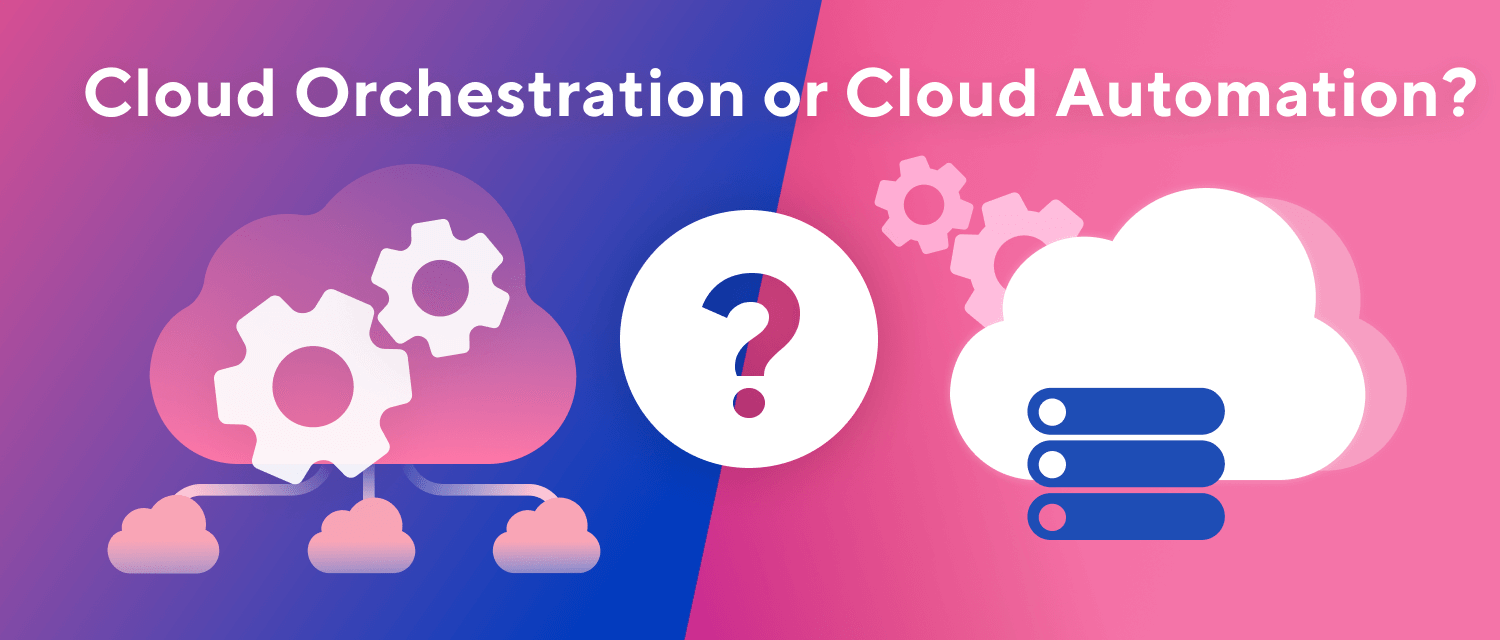
While both phrases aim to minimize possible mistakes, automation is just a small cog in the large orchestration picture. In detail, cloud automation is tools and processes without human intervention; whereas cloud orchestration coordinates many automated activities across various clouds and optimizes the consolidated workflow.
In other words, cloud automation controls independent works, such as scaling, provisioning infrastructure, monitoring performance, etc. Then, cloud orchestration helps to keep these automated tasks in order and checks if any policy is unmet.
Potential Tools for Cloud Orchestration
- Katalon TestOps is a comprehensive orchestration platform to connect test automation and DevOps teams’ test management, planning, execution, and quality analytics.
- Microsoft Azure Automation is one of the most common cloud implements. It orchestrates with other cloud service platforms (Linux, Windows) to manage updates and reduce errors. With Azure, unexpected changes in configuration files, frameworks, or reports can be tracked by any IT device.
- Morpheus is a multi-cloud orchestrator to support self-service activities. It offers automated server deployments and more built-in integrations than any other cloud orchestration.
Why Cloud Orchestration?
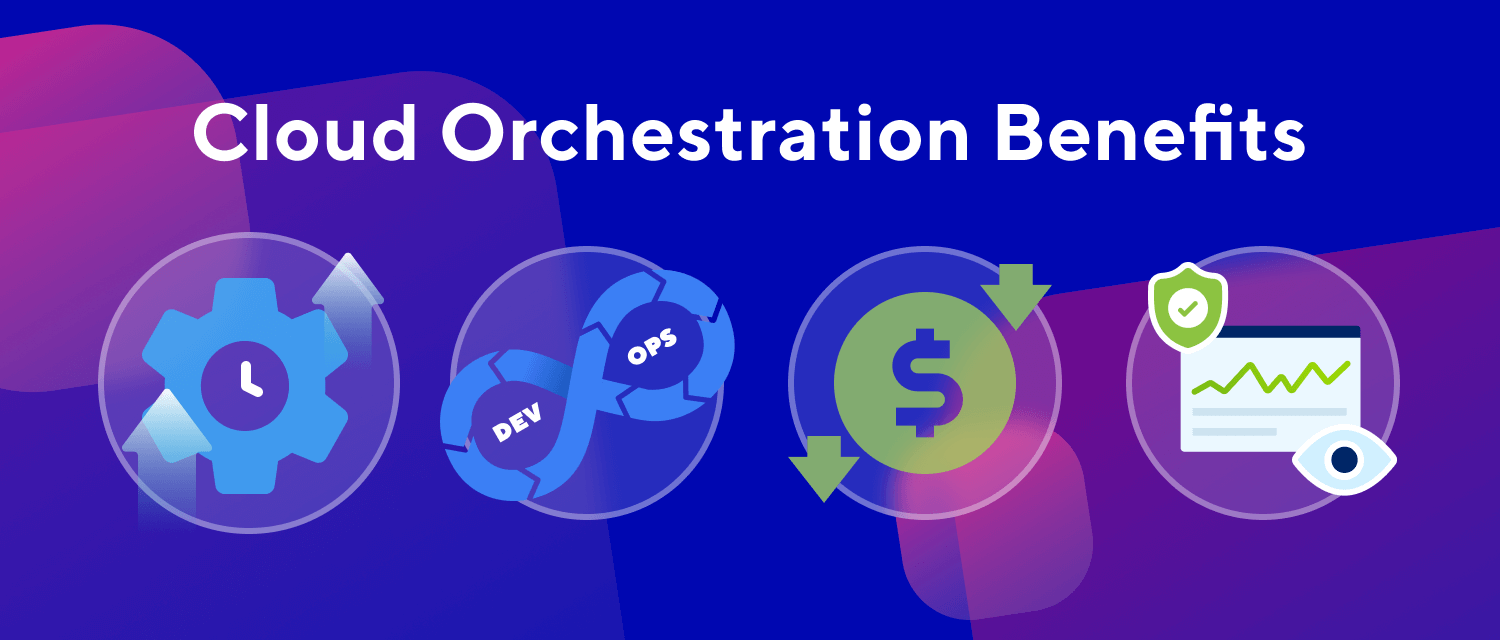
There are many reasons why orchestration in clouds is essential for a sustainable ecosystem. In particular, the benefits include:
- Increased Efficiency: Cloud orchestration shortens the time of repetitive cycles through automation, therefore customizing the end-to-end process. It also ensures that both physical and virtual cloud resources are effectively coordinated.
- Support DevOps: Orchestrator platforms enforce constant deployment, firewall, or server configurations via automation. Thus, it helps developers to concentrate more on other business values such as product design and development.
- Reduced Costs: Management in the cloud lowers the cost of infrastructure investment and reduces the number of IT staff needed. For the long-term, a company can improve its cloud service footprint and be more flexible in prioritizing business expenses.
- Enhanced Visibility & Security: The ability to automatically notice the occurrence of VM (virtual machines) sprawl is necessary for enforcing security. Cloud orchestration also analyzes current and past patterns to predict future resource usages. Besides that, it validates the users’ identity and proper permission to avoid unauthorized enters.
Read more Benefits of Test Orchestration
Conclusion
To summarize, cloud orchestration can help reduce costs, optimize workflow, and provide better connections between multiple cloud environments. Because of the obvious and practical benefits of cloud orchestration, individuals and organizations are trusting it more and more as an integral part of their operation.
|
